domingo, 27 de enero de 2013

PROJECT 4: English through literature: "Odour of Chrysanthemums" by D.H Lawrence

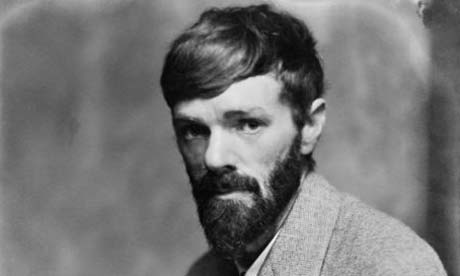
D.H Lawrence


English novelist, storywriter, critic, poet and painter, one of the greatest figures in 20th-century English literature. "Snake" and "How Beastly the Bourgeoisie is" are probably his most anthologized poems.
David Herbert Lawrence was born on September 11, 1885, in Eastwood, Nottinghamshire, central England. He was the fourth child of a struggling coal miner who was a heavy drinker. His mother was a former schoolteacher, greatly superior in education to her husband. Lawrence's childhood was dominated by poverty and friction between his parents. He was educated at Nottingham High School, to which he had won a scholarship. He worked as a clerk in a surgical appliance factory and then for four years as a pupil-teacher. After studies at Nottingham University, Lawrence matriculated at 22 and briefly pursued a teaching career. Lawrence's mother died in 1910; he helped her die by giving her an overdose of sleeping medicine.

In 1909, a number of Lawrence's poems were published by Ford Max Ford in the English Review. The appearance of his first novel, The White Peacock(1911), launched Lawrence into a writing career. In 1912 he met Frieda von Richthofen, the professor Ernest Weekly's wife and fell in love with her. Frieda left her husband and three children, and they eloped to Bavaria. Lawrence's novel Sons and Lovers appeared in 1913 and was based on his childhood . In 1914 Lawrence married Frieda von Richthofen, and traveled with her in several countries. Lawrence's fourth novel, The Rainbow (1915), was about two sisters growing up in the north of England. Lawrence started to write The Lost Girl in Italy. He dropped the novel for some years and rewrote the story in an old Sicilian farmhouse near Taormina in 1920.
During the First World War Lawrence and his wife were unable to obtain passports and were targets of constant harassment from the authorities. They were accused of spying for the Germans and officially expelled from Cornwall in 1917. The Lawrences were not permitted to emigrate until 1919, when their years of wandering began.
Lawrence's best known work is Lady Chatterly's Lover, first published privately in Florence in 1928. It tells of the love affair between a wealthy, married woman, and a man who works on her husband's estate. The book was banned for a time in both UK and the US as pornographic. Lawrence's other novels from the 1920s include Women In Love (1920), a sequel to The Rainbow.
Aaron's Rod (1922) shows the influence of Nietzsche, and in Kangaroo (1923) Lawrence expressed his own idea of a 'superman'. The Plumed Serpent (1926) was a vivid evocation of Mexico and its ancient Aztec religion. The Man Who Died (1929), is a bold story of Christ's Resurrection. Lawrence's non-fiction works include Movements In European History(1921), Psychoanalysis And The Unconscious (1922) and Studies In Classic American Literature (1923).
D.H. Lawrence died in Vence, France on March 2, 1930. He also gained posthumous renown for his expressionistic paintings completed in the 1920s.
The above biography is copyrighted. Do not republish it without permission.

Review on "Odour of Chrysanthemums"

The main theme of the story is the isolation that Elizabeth experiences, first through waiting for her husband, and after through his death. There is also another element which is continually present in the story: chrysanthemums. These flowers appear a few times throughout the book. They clearly evoke a mixture of feelings to Elizabeth, as she is seen telling her son off for picking them in the garden, remembering how one day her drunk husband walked in with a brown chrysanthemums on his button-hole; but she also keeps them in the house in vases, so they clearly also hold some good memories.
The main character is Elizabeth. She is the wife of Walter Bates. She appears to be a very bitter person, who hasn´t enjoyed life much and blames herself for this, as it was her fault having married Walter. She experiences a psichological turn when they bring in the dead body of her husband, as she seems to see him for the first time as a human person. She realises that she hasn´t ever tried to understand him. She´s only felt that she had to bear with him, putting up with his bad behaviour and the humiliation of having a husband like that.
Walter Bates is a character that never appears alive in the story but has a central part in it. All we know about him is that he is a insensitive husband and parent who prefers to spend his afternoons in the pub rather than at his home, with his wife and kids.
The story has a disturbing element in it, not being comfortable to read. It is as if the reader is shown a day in the normal life of a miner´s wife. It is also a dark story, as the whole atmosphere of the tale is mournful, slow, sad and dark.


domingo, 20 de enero de 2013

Project 3: Teamwork: News Bulletin


News bulletin


Iñigo: Good morning I´m Iñigo Lowe, here to bring you the latest headlines from around the world.
Here in the studio with us is Blanca Pardo, who will be informing you of the latest national news. So, tell us, what is happening in the country?
Blanca: The social crisis increases by the addition of the public transports sector to the multiple demonstrations that have been taking place in the whole country, the union leader has stated that the reason for them joining the other sectors who are also on strike is their rejection to the new law A605 that was going to be approved today, and implicates a reduction in the worker’s salary, as well as reduction in staff, and the abolition of extra payments such as Christmas’s.
We’ve also been informed that the sector will be on strike until the law A605 is dismissed.
We’ll inform you of any changes.
Changing the subject, we’ve been informed that yesterday a thousand kilo tuna grounded in La playa de Las Conchas, in San Sebastian, where it died shortly after, due to lack of oxygen. The vice-president of the association for the study and conservation of the oceans wildlife has stated that the specimen was a common red tuna, which had probably got to weigh a ton because of the increasing levels of contamination in the oceans that had caused a mutation in the animal’s growth gland.
The vice-president of the association has also said that the animal’s body would be moved to the national biology museum to further investigate what caused the ground of the animal, as well as to confirm the reason for it’s unusual size.
Iñigo: Conflicts between Israel and Gaza have not diminished in the last months, drawing the attention of the whole world. Luis Cabrero, reporting on international news, talks about this ongoing problem:
Luis: A Palestinian man has been killed and another injured by Israeli army gunfire in the northern parts of the besieged Gaza Strip, medical sources said. The Israeli army declined to comment on the incident. This reminds us of major military offensives launched by Israel against the Gaza Strip between November 14 and 21, 2012, which left over 160 Palestinians, including many women and children, dead and about 1,200 others injured.
And also, in the International News:
Obama signals end of Afghan war, promising to speed up handover.
Signaling a virtual end to a 12-year-old Afghan war, US President Barack Obama today promised to speed up handover of combat operations to Afghan forces, gave a go ahead for talks with Taliban and laid the groundwork with the Afghan president for a small troop presence in the country post 2014.
“By the end of next year, America’s war in Afghanistan will be over,” Obama announced in a radio address to the nation, after meeting with his Afghan counterpart Hamid Karzai.
Iñigo: In other news, the city of London has hosted the international art exposition which is held every year in different cities around the world. Thousands of art lovers have been streaming into the country to admire the never-before-seen Leonardo Da Vinci´s pictures, which had been hidden to the public for years. But last year these pieces of art where bought by a famous bank manager and brought to light.
This event has entailed an important income to the city, which was in fact going through a moment of economic difficulty.
And finally, Javier Serrano will be giving us the latest sport news. So, what is happening?
Javier: Today we have breaking news; Messi has turned out to be injured due to a strong tackle received by Pepe during the Barça-Real Madrid. The player will be one month without being able to play and the FIFA will punish the player Pepe with five matches of suspension.

In other sports, today began the Great Prize of Formula 1, in the race track of Montmeló. Fernando Alonso has obtained the second best time in the fast lap around the race track, behind Michael Schumacher, which grants him the second position in opening line. Tomorrow we will be able to see the results of the race.
In the world of the basketball, we have the results of yesterday´s match between the Lakers and the Chicago Bulls, with an incredible victory of the Lakers. The result was 86 to 55, and the man of the match was Pau Gasol, who scored a total of 29 points and left us with some of the best plays of the match.
Iñigo: Now we will move onto the national weather. Our expert meteorologist, Blanca Pardo, explains:
Blanca: This year we’re having an unusually hot and dry winter. The temperatures will keep stable which means we won’t need coats or scarfs yet.
As we can see the maximum temperatures in the whole country will be around 25-27 degrees, reaching 30 in the southwest of the peninsula.
Regarding the minimum temperatures, they will be above 10 degrees in the whole peninsula; excluding the southwest, where they will be higher, and almost reaching 18 degrees. In Castilla y León the minimum temperatures are estimated to be less than 6 degrees.
Iñigo: So, this is all for today. We will be bringing you the top news on the day every day. Be sure to tune in at the right time tomorrow. Good-bye for now!


Click here to listen to the radio podcast!


sábado, 12 de enero de 2013

Project 2: Creative Writing : That little girl


That little girl


The little girl was running along the street. It was three o´clock in the early morning.
Her grandmother had sent her running to rouse up the village when they had seen the
red flames leaping up to the sky from behind the trees of the neighboring farm.
Maybe it was a fire that had broken out accidentally or, even worse, an attack on the
farm, she thought as she ran along the middle of the street. Whichever the answer,
she had to get to her uncle´s house fast. She finally arrived, and stood before the dark
entrance to the hut, feeling suddenly scared and insecure. She had heard a low growl
in the bushes on the right. She knew that sound well, it was a hyena. These creatures
always roamed around when something bad was happening. The little girl remembered
this and jumped into the hut shouting.
The hyena watched from its hiding place in the bushes. A moment later, four men came
running out of the hut, waving torches and shouting. They were running down the road.
With a leap, the hyena was after them. It smelt the smoke in the air and knew that there
would be something to plunder or eat. It finally arrived to the burning farm. It was
surrounded by men, outlined against the flames, working to help people inside get out.
The hyena was late; there would be nothing to eat tonight, thanks to that little girl.


Project 1: Presentation: "How to play football"